2015 – MAY – SL
6.1 (IB 2015/MAY – SL 1/C)
Question refer to the following diagram of a human digestive system.
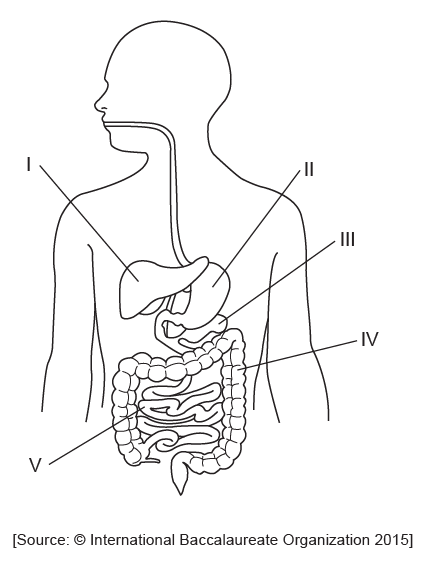
Where would an enzyme that digests lipids be produced?
A. I
B. II
C. III
D. IV
6.1 (IB 2015/MAY – SL 1/D)
Question refer to the following diagram of a human digestive system.
In which region is most glucose absorbed through the villi?
A. I
B. II
C. IV
D. V
6.2 (IB 2015/MAY – SL 1/C)
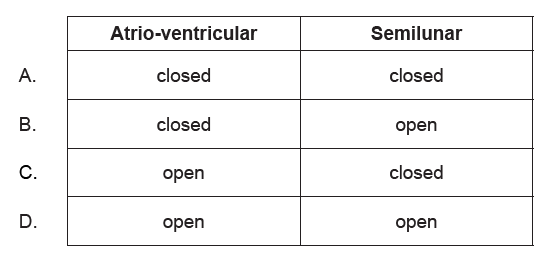
In what position are the atrio-ventricular and semilunar valves when the ventricles are relaxing?
6.5 (IB 2015/MAY – SL 1/B)
How do neurotransmitters cross a synapse to reach the postsynaptic membrane?
A. Carried in vesicles
B. Diffusion
C. Active transport
D. Facilitated diffusion
6.6 (IB 2015/MAY – SL 1/A)
Which describes the secretion of hormones in the pancreas in response to low levels of glucose in the blood?
A. Secretion of glucagon from α cells
B. Secretion of glucagon from β cells
C. Secretion of insulin from α cells
D. Secretion of insulin from β cells
6.4 (IB 2015/MAY – SL 1/B)
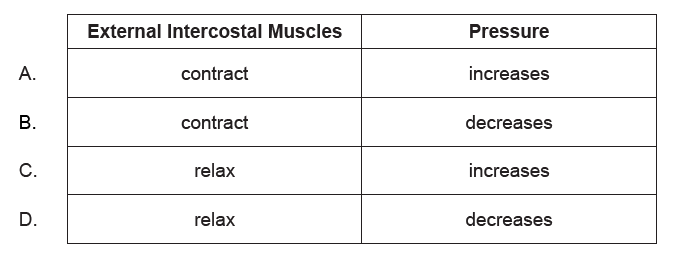
What changes take place in the thorax during inhalation?
6.6 (IB 2015/MAY – SL 1/C)
Which hormone shows the greatest fall in blood concentration just before menstruation?
A. FSH (follicle stimulating hormone)
B. LH (luteinizing hormone)
C. Progesterone
D. Estrogen
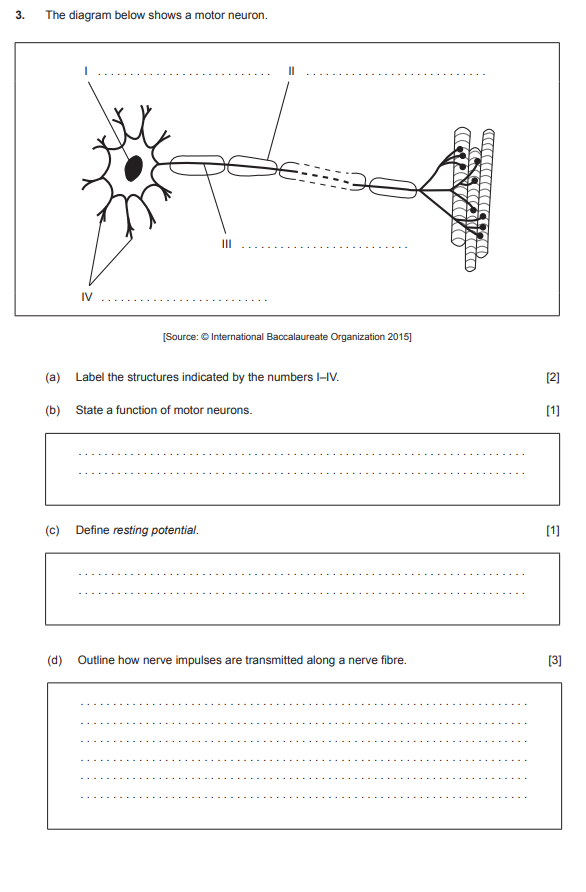
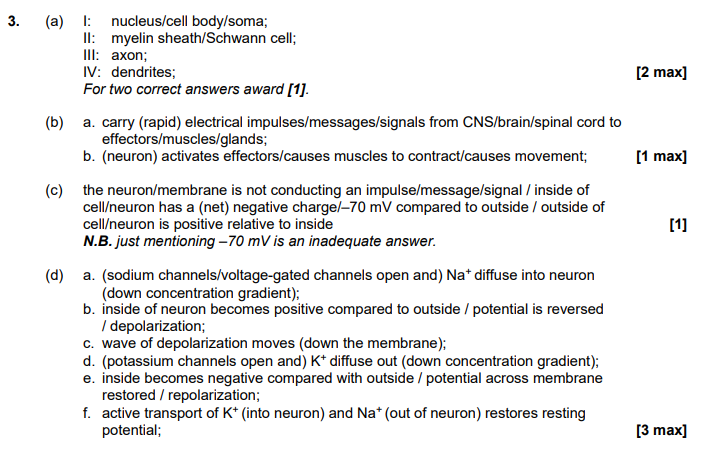
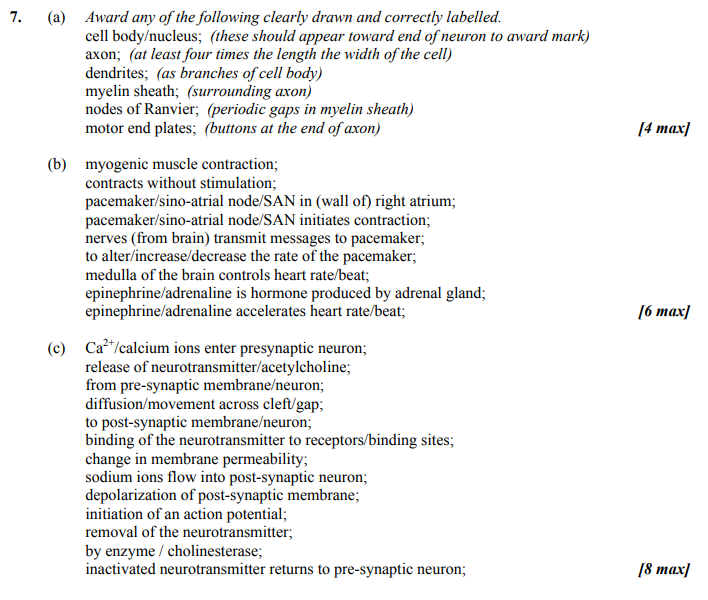
6.5 (IB 2015/MAY – SL P2/3)
2014 – NOVEMBER
6.1 (IB 2014/NOV – SL 1/B)
Colonic irrigation involves regularly flushing the large intestine with water. Why should this practice be avoided?
A. The large intestine absorbs water.
B. Vitamin-producing bacteria are eliminated.
C. It will stimulate the production of toxins.
D. Undigested remains of food are removed.
6.2 (IB 2014/NOV – SL 1/C)
Which vessel carries deoxygenated blood from the heart to the lungs?
A. Vena cava
B. Coronary vein
C. Pulmonary artery
D. Pulmonary vein
6.2 (IB 2014/NOV – SL 1/D)
What role does the medulla of the brain have in controlling heart rate?
A. To secrete adrenaline to speed up the heart.
B. To stimulate myogenic heart muscle contraction.
C. To block pacemaker activity.
D. To adjust heart rate to changing blood pressure.
6.3 (IB 2014/NOV – SL 1/B)
Which is a long-term effect of the human immunodeficiency virus (HIV) on the immune system?
A. Fewer bacterial infections
B. Fewer active lymphocytes
C. More antibody production
D. More antigen recognition
6.4 (IB 2014/NOV – SL 1/A)
During expiration, how does air pressure in the lungs compare with atmospheric pressure?
A. Lung air pressure is greater than atmospheric pressure.
B. Lung air pressure is less than atmospheric pressure.
C. Lung air pressure starts below atmospheric pressure and rises above it.
D. Lung air pressure starts above atmospheric pressure and falls below it.
6.5 (IB 2014/NOV – SL 1/D)
Where do motor neurons conduct impulses from and to?
A. From effectors to the central nervous system.
B. From receptors to the central nervous system.
C. From neurons to other neurons.
D. From the central nervous system to effectors.
6.6 (IB 2014/NOV – SL 1/C)
What are increasing levels of progesterone responsible for during the female menstrual cycle?
A. Stimulating ovulation
B. Development of the follicle
C. Thickening of the endometrium
D. Menstruation
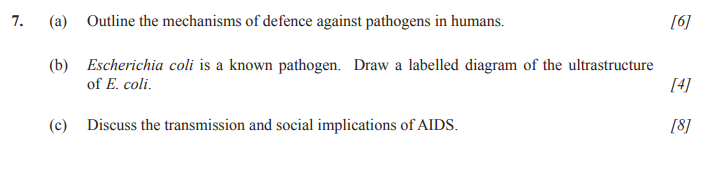
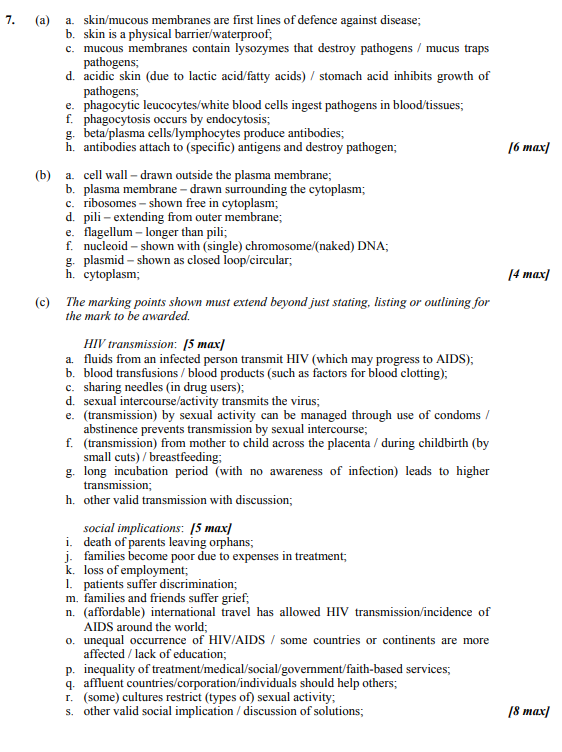
6.3 (IB 2014/NOV – SL P2/7)
2014 – MAY
6.1 (IB 2014/MAY – SL 1/B)
Which structure directly absorbs nutrient molecules from the digestive tract?
A. Esophagus
B. Villus
C. Liver
D. Large intestine
6.2 (IB 2014/MAY – SL 1/D)
Which is/are involved in the control of heart rate?
I. Heart pacemaker
II. Hormone secretion
III. Nerves
A. I only
B. III only
C. I and II only
D. I, II and III
6.3 (IB 2014/MAY – SL 1/B)
What describes antigens?
A. They catalyze immune reactions.
B. They activate specific white blood cells.
C. They destroy bacteria but not viruses.
D. They are only produced by white blood cells.
6.4 (IB 2014/MAY – SL 1/C)
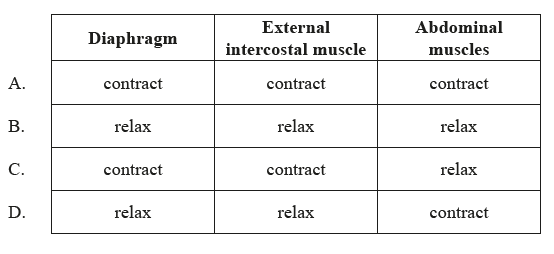
What would allow inhalation to occur during ventilation?
6.5 (IB 2014/MAY – SL 1/A)
Where could an action potential occur in a motor neuron?
A. Anywhere on the cell membrane
B. Dendrites only
C. Cell body only
D. Axon only
6.6 (IB 2014/MAY – SL 1/D)
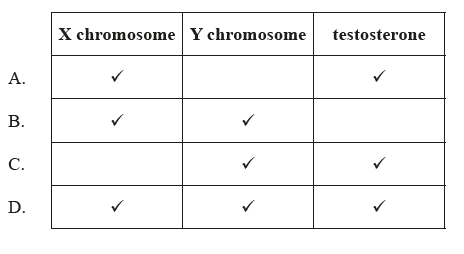
What must be present for a human fetus to develop into a normal male?
6.2 (IB 2014/MAY – SL P2/2)
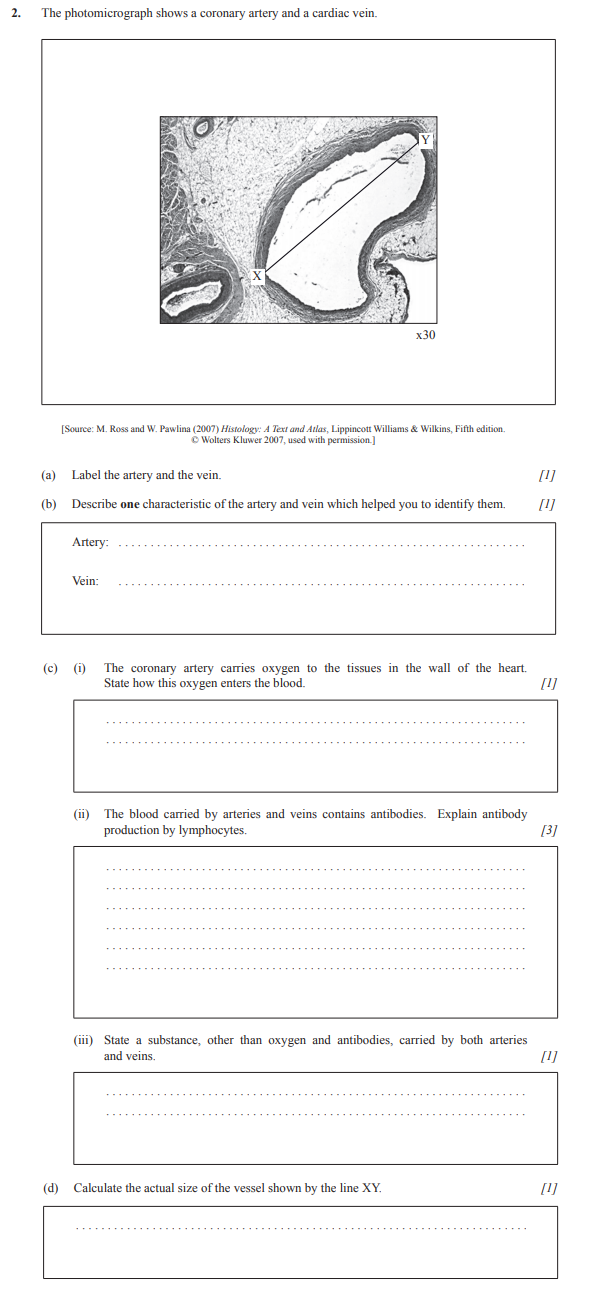
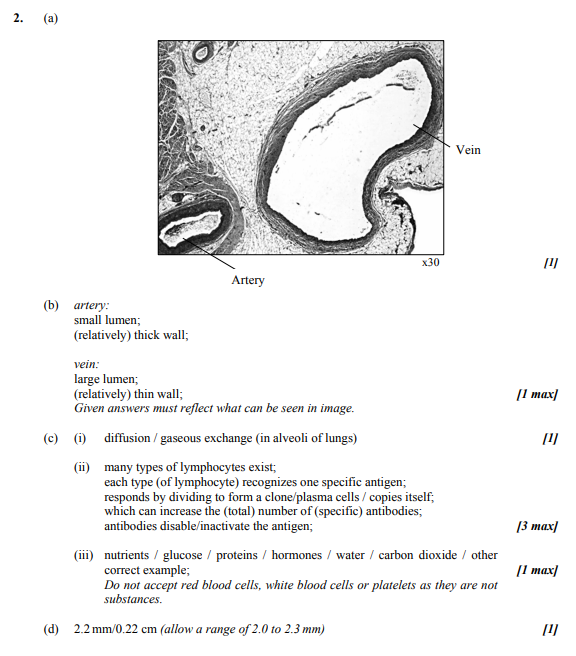
6.6 (IB 2014/MAY – SL P2/6)

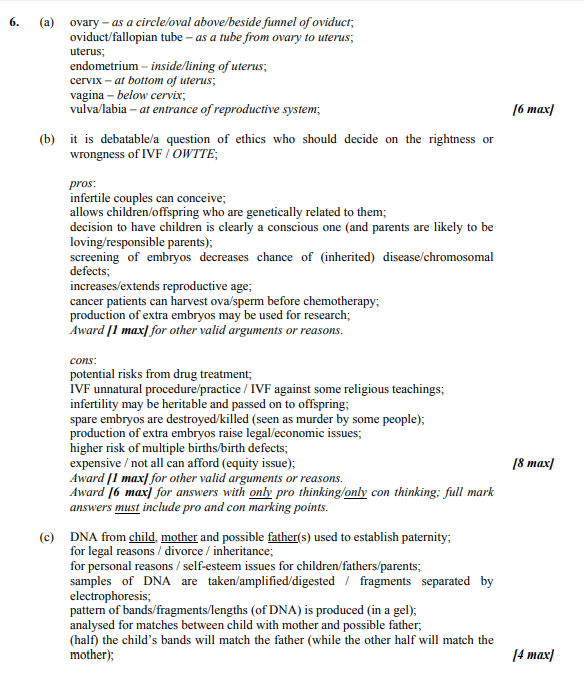
2013 – NOVEMBER
6.1 (IB 2013/NOV – SL 1/23A)
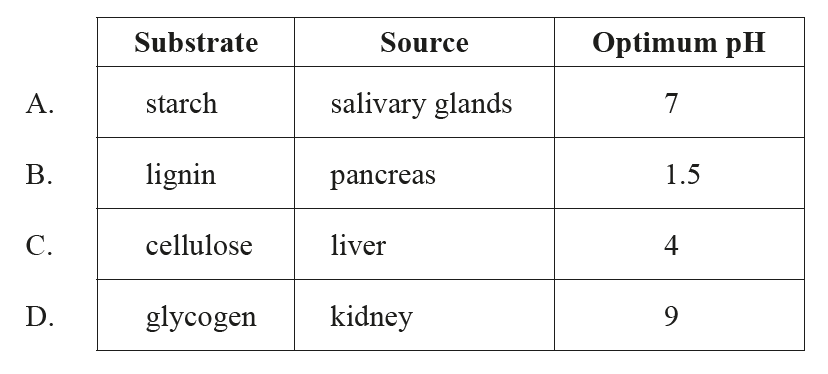
What are features of the enzyme amylase?
6.3 (IB 2013/NOV – SL 1/24B)
Why are antibiotics effective against pathogenic bacteria?
A. Bacteria have a high rate of mutation
B. Bacterial cell processes are blocked
C. Bacteria have a slow metabolism
D. Bacteria assimilate antibiotics
6.2 (IB 2013/NOV – SL 1/25C)
The diagram below shows the human heart.
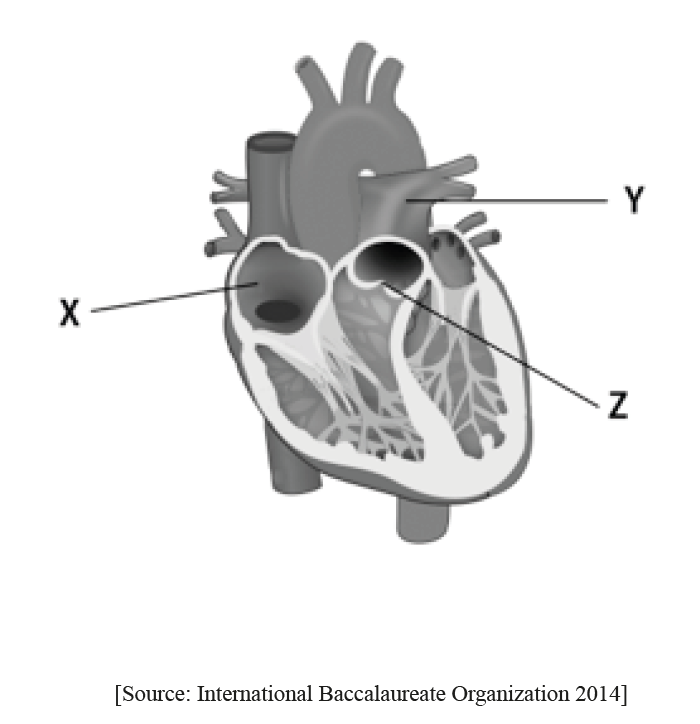
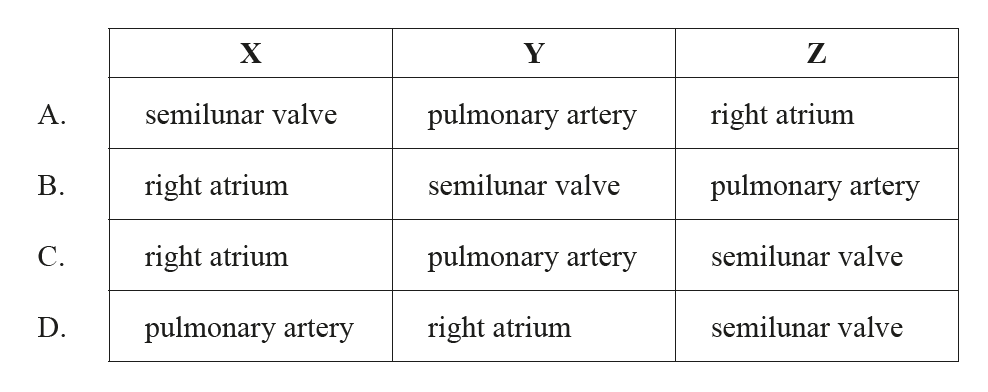
What structures are indicated by the labels X, Y and Z?
6.4 (IB 2013/NOV – SL 1/26B)
What is dissolved in blood plasma?
A. carbon dioxide, erythrocytes and platelets
B. amino acids, glucose and urea
C. carbon dioxide, oxygen and heat
D. glycogen, antibodies and urea
6.5 (IB 2013/NOV – SL 1/27D)
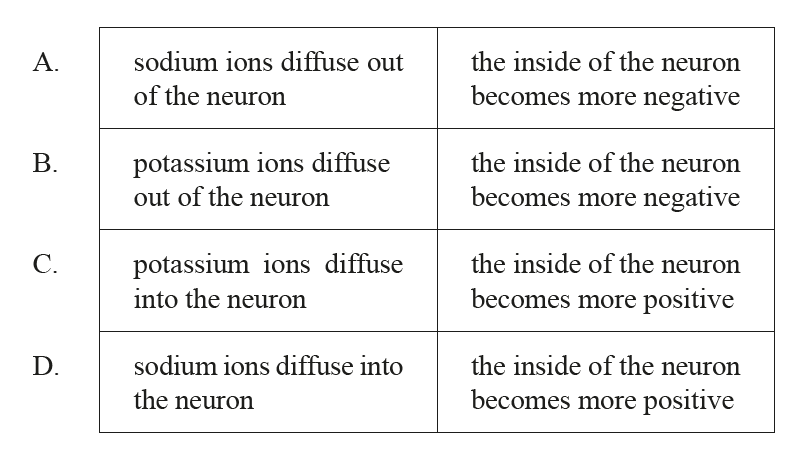
The diagram below shows the changes in membrane potential during an action potential.
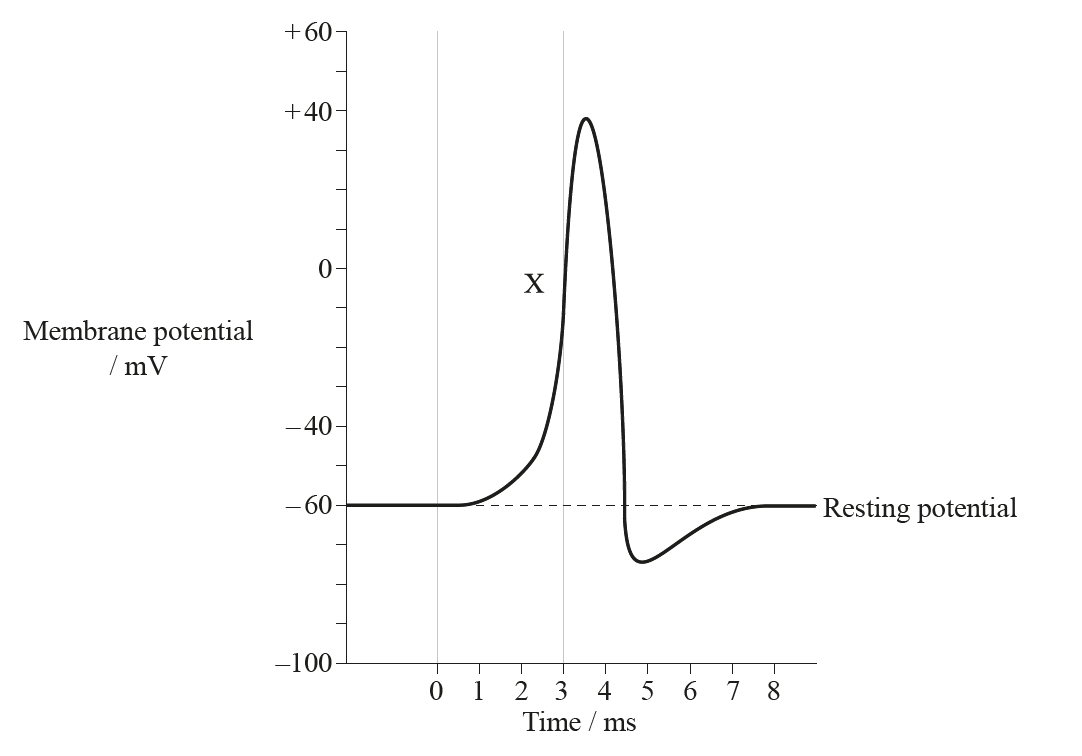
What best describes events indicated by the label X?
6.6 (IB 2013/NOV – SL 1/28B)
The diagram below shows the female reproductive system.
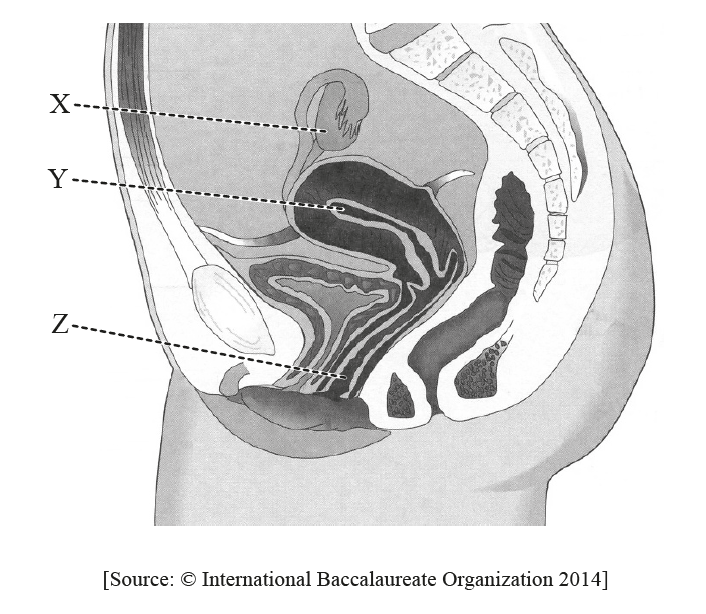
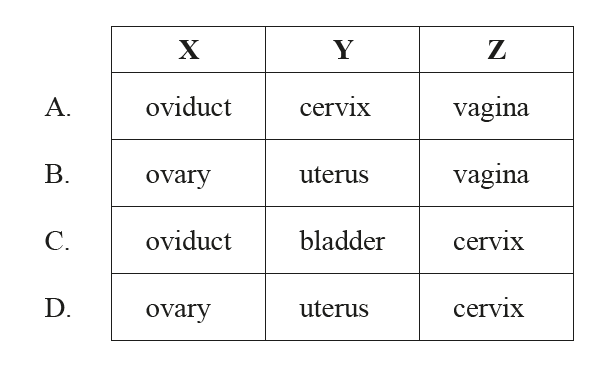
What are the structures indicated by X, Y and Z?
6.6 (IB 2013/NOV – SL 1/29A)
What is the body’s response to low blood glucose levels?
A. Alpha cells in the pancreas secrete glucagon
B. Beta cells in the pancreas secrete insulin
C. Alpha cells in the pancreas secrete insulin
D. Beta cells in the pancreas secrete glucagon
6.5 (IB 2013/NOV – SL 1/30C)
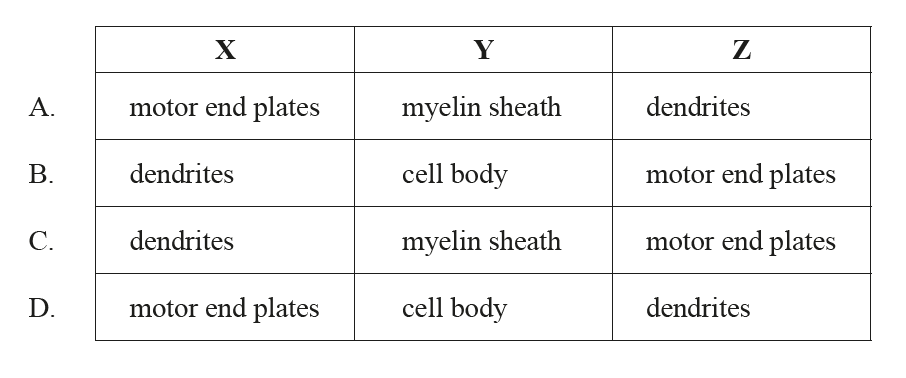
The diagram below shows a motor neuron.
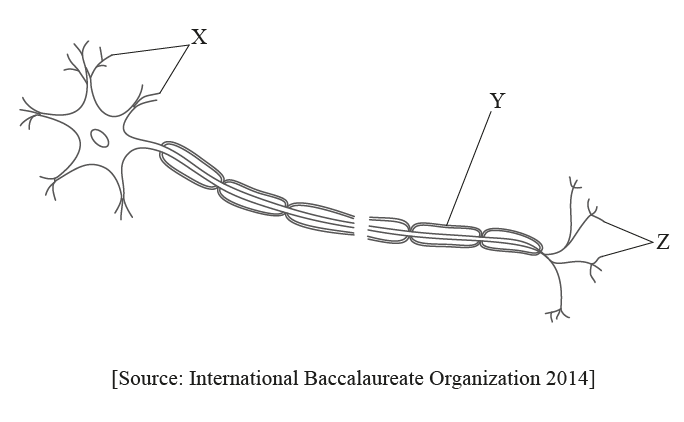
What are the structures indicated by X, Y and Z?
2013 – MAY
6.1 (IB 2013/MAY – SL 1/24A)
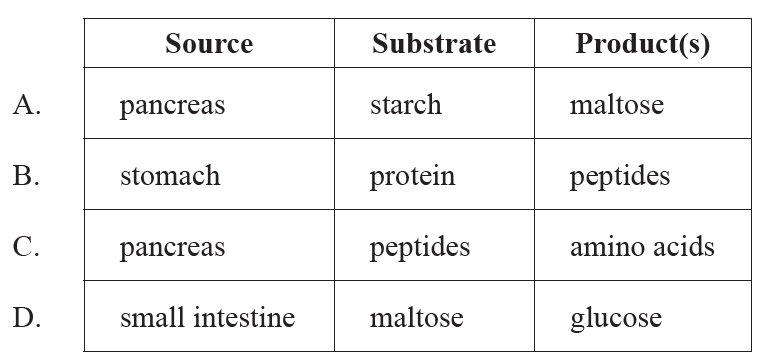
Which enzyme is amylase?
6.1 (IB 2013/MAY – SL 1/25C)
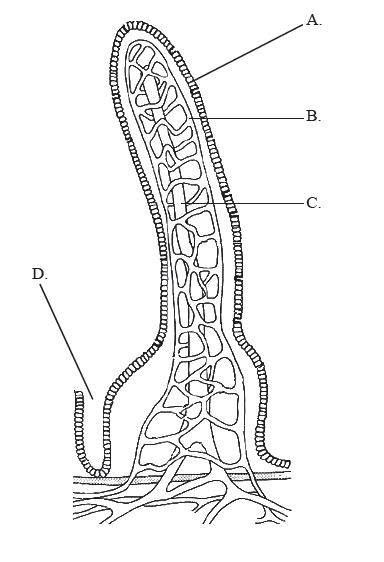
Which label represents the lacteal?
6.2 (IB 2013/MAY – SL 1/26D)
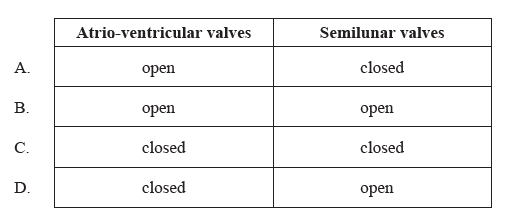
What is the state of the atrio-ventricular and semilunar valves when the left ventricle contracts?
6.5 (IB 2013/MAY – SL 1/27B)
Immediately after an action potential, which event causes the neuron membrane to repolarize?
A. Voltage-gated sodium channels open.
B. Voltage-gated potassium channels open.
C. Voltage-gated calcium channels close.
D. Voltage-gated potassium channels close.
6.4 (IB 2013/MAY – SL 1/28D)
What changes occur in the thorax of a mammal when the external intercostal muscles and diaphragm muscles contract?
A. Pressure increases and volume decreases.
B. Pressure and volume both increase.
C. Pressure and volume both decrease.
D. Pressure decreases and volume increases.
6.2 (IB 2013/MAY – SL 1/29D)
How does the body respond to an increase in body temperature?
I. Vasoconstriction of skin arterioles
II. Shivering
III. Vasodilation of skin arterioles
A. I only
B. I and II only
C. II and III only
D. III only
6.6 (IB 2013/MAY – SL 1/30B)
Oral contraceptives taken by women contain the hormone progesterone. How does this prevent pregnancy?
A. It stops menstruation.
B. It inhibits the secretion of FSH.
C. It blocks the fallopian tubes (oviducts).
D. It stimulates the production of estrogen.
(IB 2013/MAY – SL P2/5)

2012 – NOV
6.3 (IB 2012/NOV – SL 1/24D)
What are antibodies?
A. Organisms or viruses that cause disease
B. Drugs used to treat bacterial diseases
C. Substances the body recognizes as foreign
D. Proteins that bind to foreign substances
6.1 (IB 2012/NOV – SL 1/25D)
A structure has a thin epithelium of one cell layer and contains a lacteal and blood capillaries. It has protein channels and mitochondria to aid absorption. What is this structure?
A. Alveolus
B. Gastric gland
C. Pancreas
D. Villus
6.4 (IB 2012/NOV – SL 1/26A)
Which statement describes the movements of the rib cage during inhalation of air?
A. External intercostal muscles contract moving the ribs up and outwards.
B. Internal intercostal muscles contract moving the ribs down and inwards.
C. External intercostal muscles relax moving ribs down and inwards.
D. Internal intercostal muscles relax moving ribs up and outwards.
6.5 (IB 2012/NOV – SL 1/27B)
The diagram shows events at a synapse.
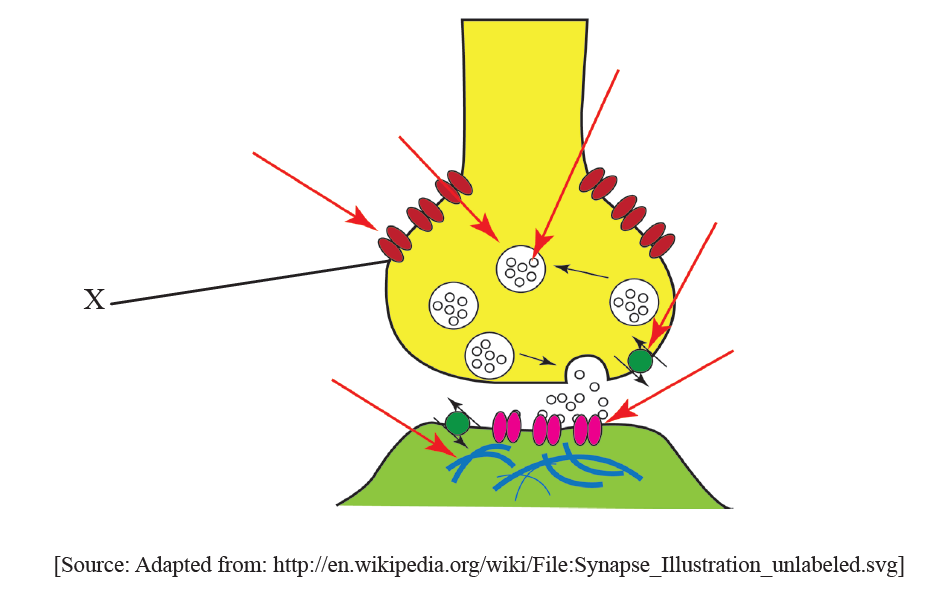
What is happening at the point labelled X?
A. Neurotransmitter binding
B. Ca2+ diffusing
C. Neurotransmitter moving across synapse
D. Na2+ binding
6.6 (IB 2012/NOV – SL 1/28B)
What is a feature of type I diabetes but not type II diabetes?
A. Target cells become insensitive to insulin.
B. β cells do not produce sufficient insulin.
C. Type I diabetes can be controlled through a low carbohydrate diet.
D. α cells produce excess insulin.
6.6 (IB 2012/NOV – SL 1/29B)
The concentration of which hormone peaks sharply triggering ovulation?
A. FSH
B. LH
C. Estrogen
D. Progesterone
6.6 (IB 2012/NOV – SL 1/30C)
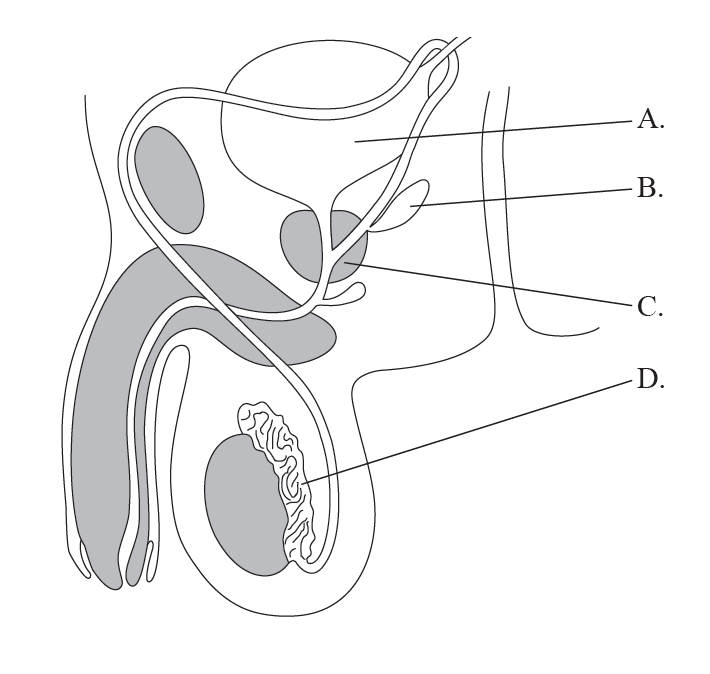
The diagram shows a section through the male reproductive system. Which structure represents the prostate gland?
(IB 2012/NOV – SL P2/7)
2012 – MAY
6.1 (IB 2012/MAY – SL 1/24B)
The diagram below shows the human digestive system.
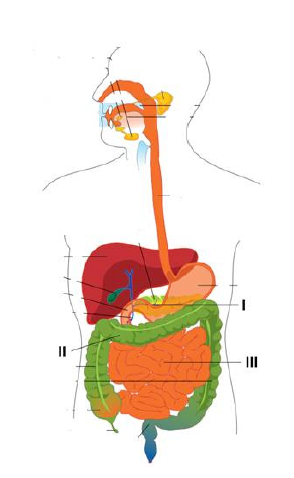
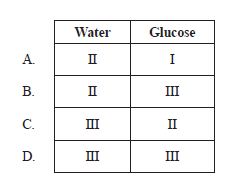
In which parts of the digestive system are most water and glucose absorbed?
6.2 (IB 2012/MAY – SL 1/25D)
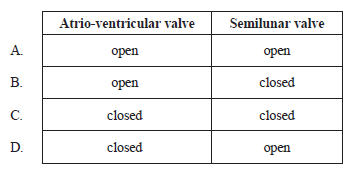
What is the condition of the valves of the heart when the right ventricle is contracting?
6.3 (IB 2012/MAY – SL 1/26D)
What effect does HIV have on the immune system?
A. It prevents leucocytes from fighting bacteria by phagocytosis.
B. It causes excessive production of leucocytes in bone marrow.
C. It destroys antibodies produced by leucocytes.
D. It lowers the number of leucocytes, reducing antibody production.
6.4 (IB 2012/MAY – SL 1/27D)
What is a similarity between arteries and capillaries?
A. They both have elastic tissue.
B. They both have smooth muscle cells.
C. Neither has collagen fibres in their walls.
D. Neither has valves.
6.5 (IB 2012/MAY – SL 1/28C)
What is a characteristic of axons in motor neurons?
A. When there is a resting potential, the outside of the axon is negative relative to the inside.
B. During an action potential, Na+ ions diffuse out of the axon.
C. K+ ions diffusing out of the axon repolarizes it.
D. Impulses in the axon travel towards the cell body.
6.6 (IB 2012/MAY – SL 1/29A)
Which response takes place when blood glucose levels are low?
A. Glucagon is released from the α cells of the pancreatic islets.
B. Glucagon is released from the β cells of the pancreatic islets.
C. Insulin is released from the α cells of the pancreatic islets.
D. Insulin is released from the β cells of the pancreatic islets.
6.6 (IB 2012/MAY – SL 1/30D)
During the menstrual cycle, what occurs in response to a fall in the progesterone level?
A. Growth of the uterus lining
B. Growth of the follicle surrounding the egg
C. Ovulation
D. Menstruation
2011 – NOV
6.5 (IB 2011/NOV – SL 1/25D)
Between which structures do sensory neurons carry nerve impulses?
A. From effectors to the central nervous system (CNS)
B. From effectors to receptors
C. From receptors to effectors
D. From receptors to the central nervous system (CNS)
6.5(IB 2011/NOV – SL 1/26B)
Which term describes the phase of rapid entry of sodium ions (Na+) into an axon during an action potential?
A. Active transport
B. Depolarization
C. Ion pumping
D. Repolarization
6.6 (IB 2011/NOV – SL 1/27A)
Which of the following is a characteristic of type I but not type II diabetes?
A. β cells in the pancreas are destroyed.
B. Insulin injections are required.
C. α cells in the pancreas are destroyed.
D. Sugar intake control is required.
6.6 (IB 2011/NOV – SL 1/28D)
Which hormone triggers ovulation?
A. FSH
B. Testosterone
C. Progesterone
D. LH
6.2 (IB 2011/NOV – SL 1/29D)
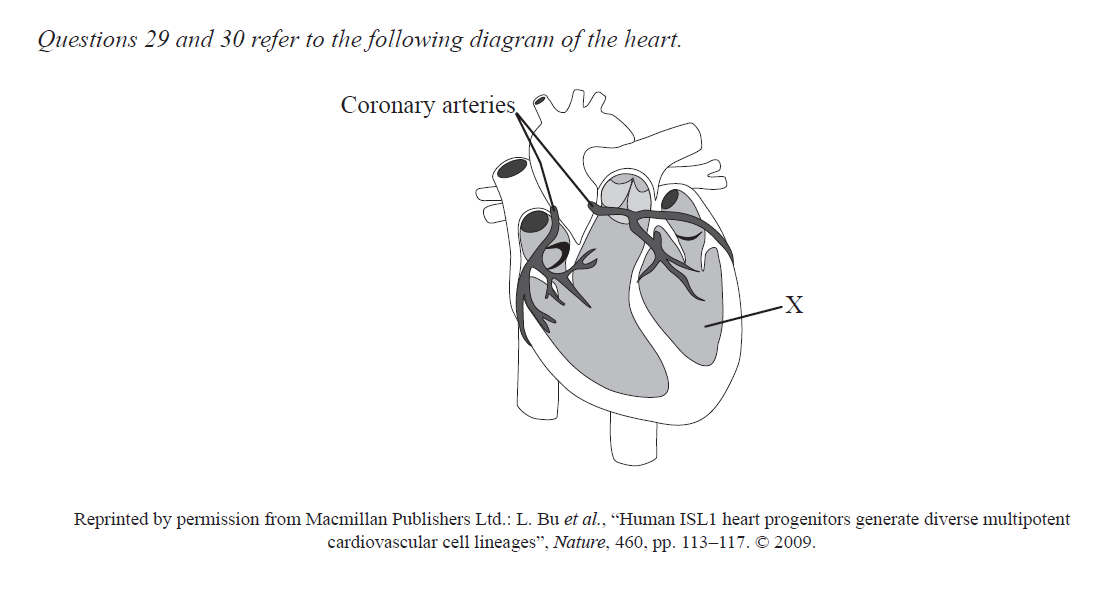
What is the structure labelled X?
A. Right ventricle
B. Right atrium
C. Left atrium
D. Left ventricle
6.2 (IB 2011/NOV – SL 1/30C)
What is a role of the coronary arteries?
A. To transport oxygen from the lungs directly to the heart muscle
B. To remove deoxygenated blood from the heart muscle
C. To supply the heart muscle with nutrients
D. To remove cholesterol from the heart muscle
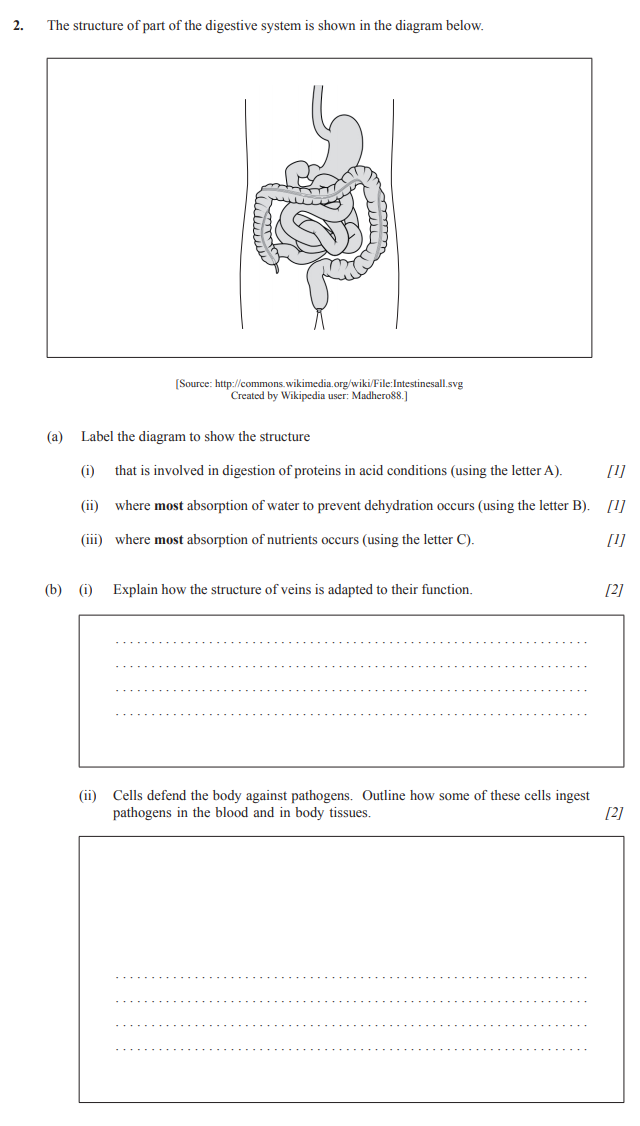
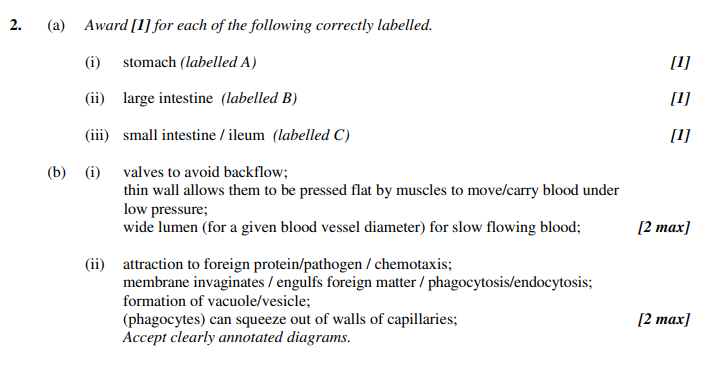
(IB 2011/NOV – SL P2/2)
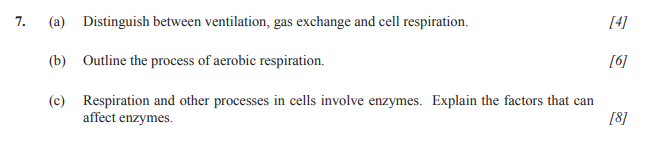
(IB 2011/NOV – SL P2/7)
2011 – MAY
6.1 (IB 2011/MAY – SL 1/25B)
Celiac disease causes the destruction of the villi cells. Which of the following is most likely to happen to people with celiac disease?
A. Incomplete digestion of fats
B. Poor absorption of calcium
C. Increased levels of glucose in blood
D. Damage in the esophagus caused by increase in acid content of the stomach
6.2 (IB 2011/MAY – SL 1/26C)
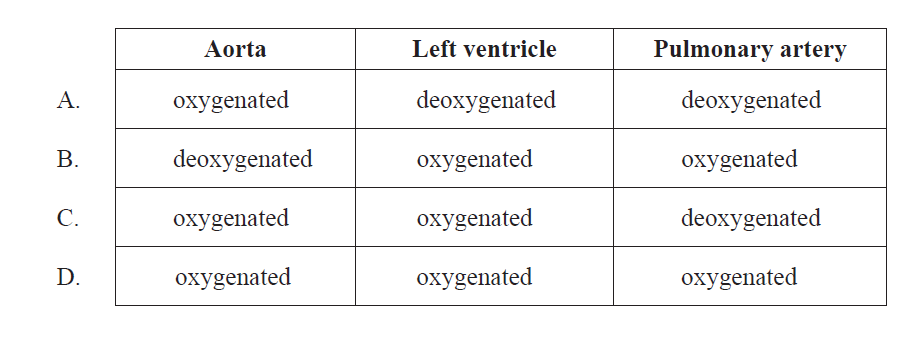
Is the blood in the aorta, left ventricle and pulmonary artery oxygenated or deoxygenated?
6.3 (IB 2011/MAY – SL 1/27A)
Which of the following statements about antibodies is correct?
A. Antibodies are polypeptides.
B. Antibodies are produced by the bone marrow.
C. Antibodies are pathogenic foreign substances.
D. Antibodies kill bacteria but not viruses.
6.4 (IB 2011/MAY – SL 1/28B)
What normally prevents the membranes of the alveoli from sticking together during expiration?
A. The thickness of the single-cell layer of alveoli membranes
B. The secretion of fluids in the inner surface of the alveoli
C. The pressure within the thoracic cavity
D. The dense net of capillaries covering the alveoli
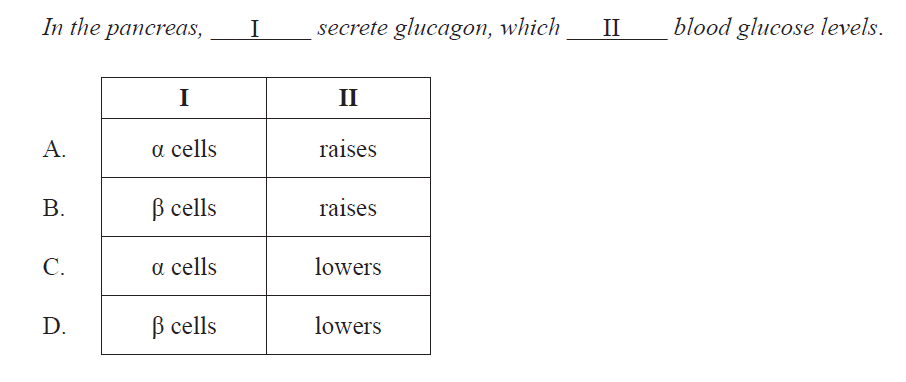
6.6 (IB 2011/MAY – SL 1/29A)
Which words from the table below complete the sentence correctly?
6.6 (IB 2011/MAY – SL 1/30D)
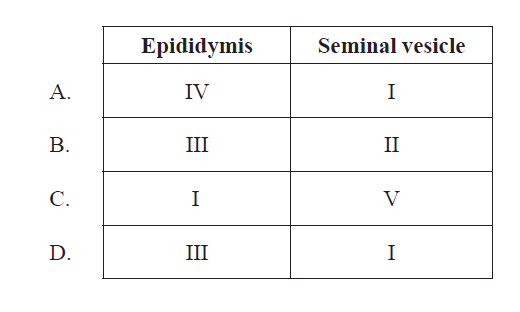
The diagram below shows the male reproductive system.
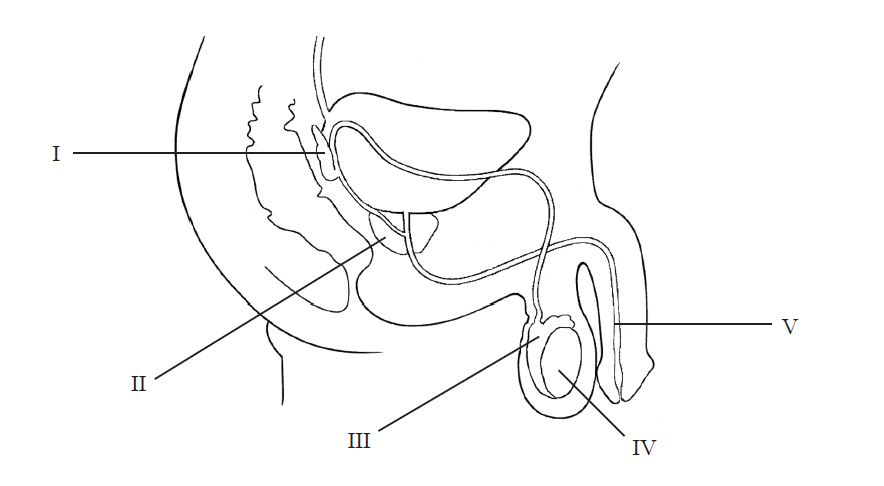
Which are the epididymis and the seminal vesicle in the diagram?
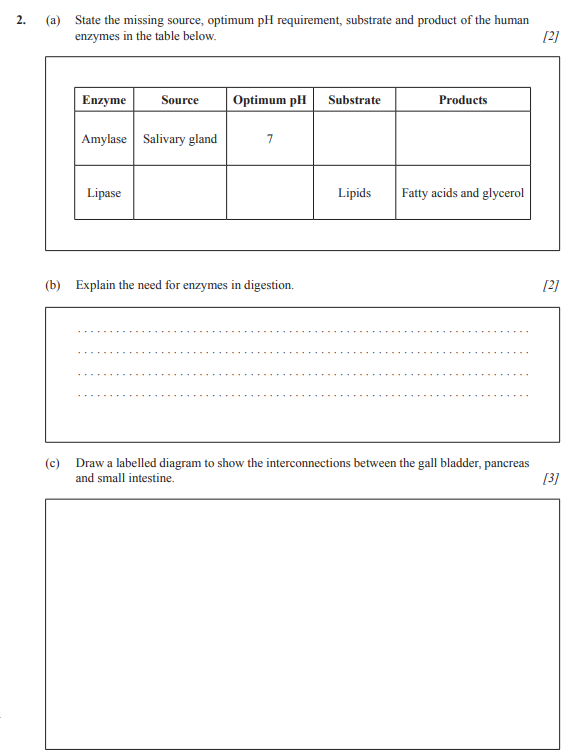
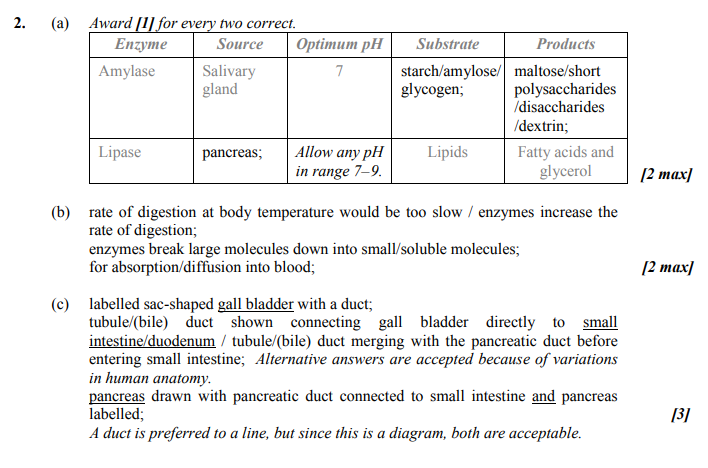
6.1 (IB 2011/MAY – SL P2/2)
2010 – NOV
6.1 (IB 2010/NOV – SL 1/24C)
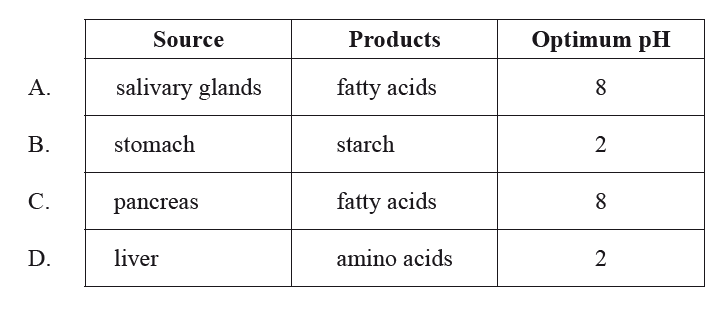
What is true of the source, products and optimum pH of the lipase found in the human digestive system?
6.2 (IB 2010/NOV – SL 1/25C)
Which chamber of the heart has the thickest walls?
A. Left atrium
B. Right atrium
C. Left ventricle
D. Right ventricle
6.3 (IB 2010/NOV – SL 1/26A)
What causes air to be breathed out by the lungs?
A. The diaphragm relaxes and the ribs fall.
B. The ribs rise and the external intercostal muscles relax.
C. The internal intercostal muscles contract and the ribs rise.
D. The diaphragm contracts and internal intercostal muscles contract.
6.5 (IB 2010/NOV – SL 1/27C)
What causes the formation of a nerve impulse on the post-synaptic membrane?
A. Ca2+ binding with a receptor site
B. K+ leaking into the post-synaptic membrane
C. Neurotransmitter binding with receptor sites
D. Neurotransmitter being removed from the synapse
6.6 (IB 2010/NOV – SL 1/28A)
What is the difference between the origin of type I and type II diabetes?
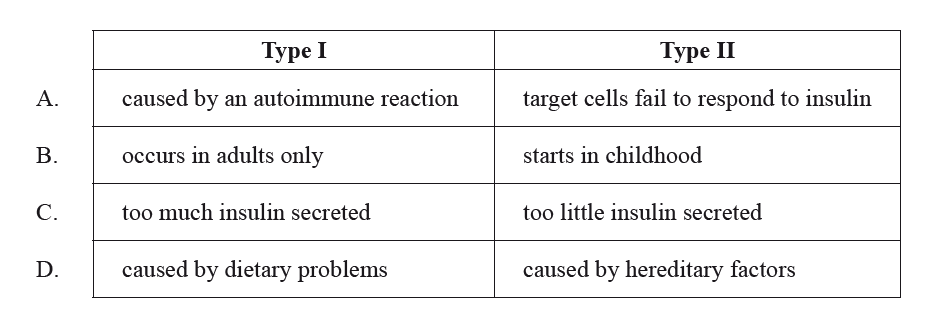
6.6 (IB 2010/NOV – SL 1/29A)
The following diagram shows the human female reproductive system as seen from the side.
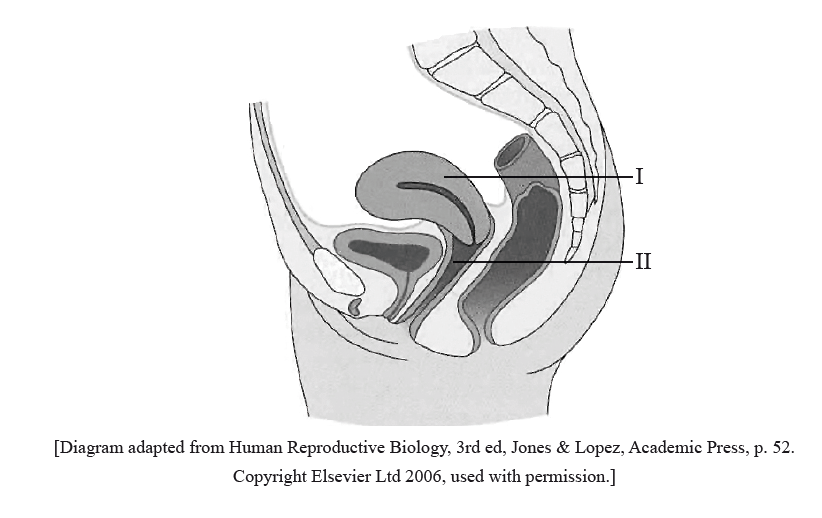
What are the names of the organs labelled I and II?
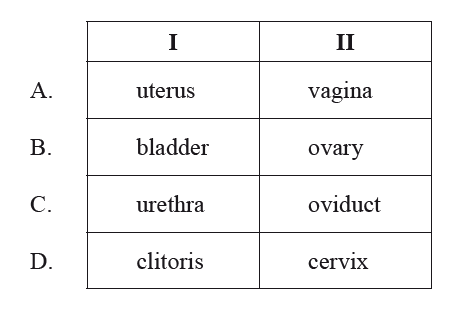
6.6 (IB 2010/NOV – SL 1/30C)
The hormones progesterone and LH were measured in a woman’s blood over 40 days. When did her menstrual bleed start?
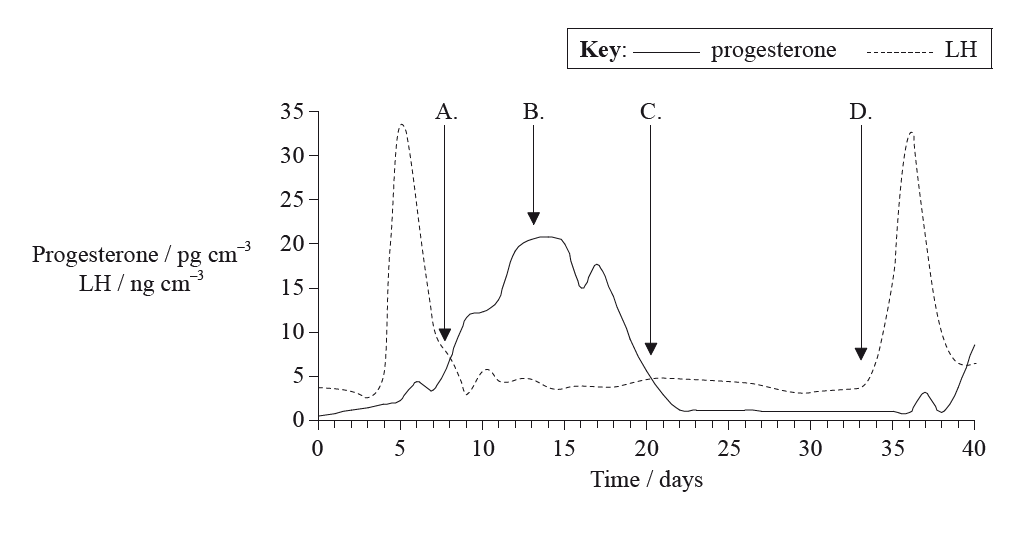
(IB 2010/NOV – SL P2/6)
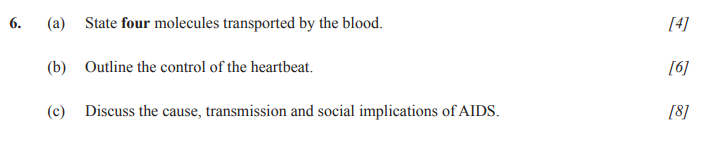
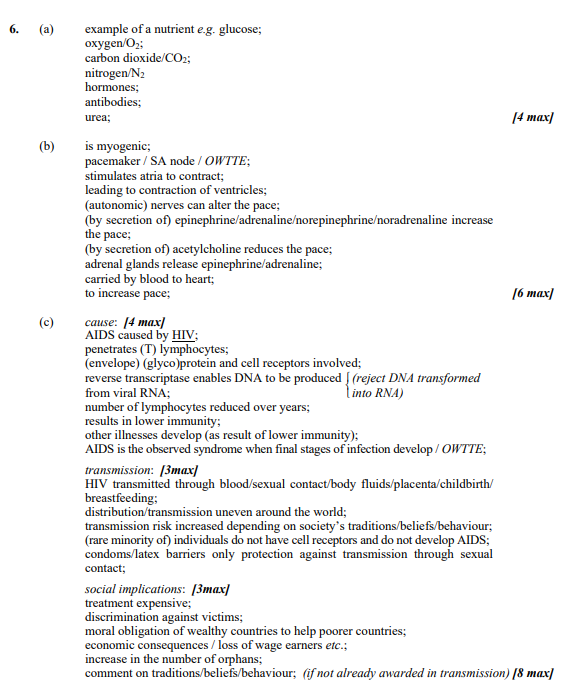
2010 – MAY
6.1 (IB 2010/MAY – SL 1/24A)
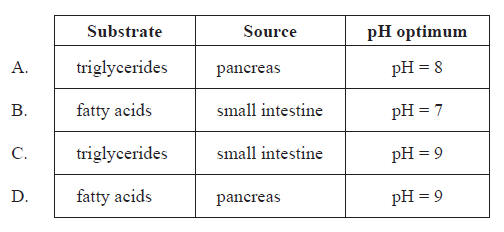
Which of the following is correct for lipase?
6.1 (IB 2010/MAY – SL 1/25B)
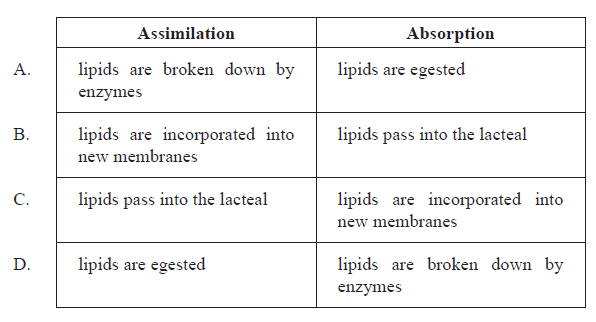
What processes occur during assimilation and absorption of lipids?
6.2 (IB 2010/MAY – SL 1/26D)
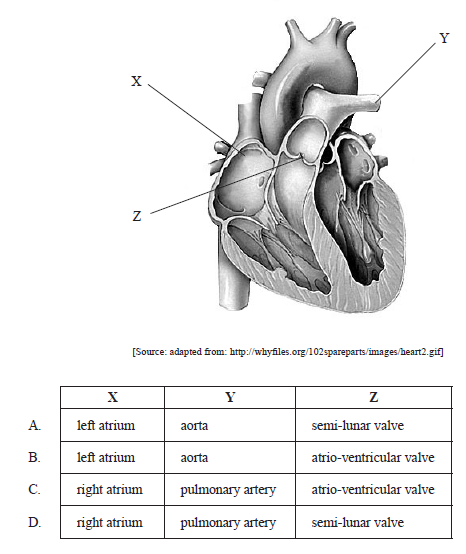
The diagram below shows the human heart. What structures are indicated by the labels X, Y and Z?
6.3 (IB 2010/MAY – SL 1/27C)
What are two effects of HIV on the immune system?
A. Reduction in antibody production and increase in active lymphocytes
B. Increase in antibody production and decrease in red blood cells
C. Reduction in antibody production and decrease in active lymphocytes
D. Increase in antibody production and increase in red blood cells
6.4 (IB 2010/MAY – SL 1/28A)
What is the function of the structure labelled X?
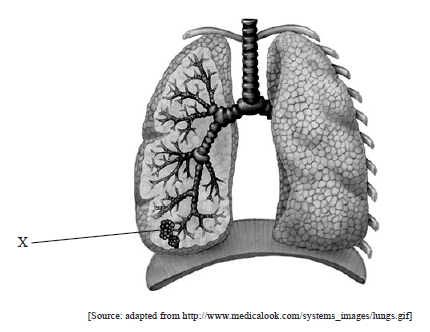
A. Gas exchange
B. Ventilation
C. Respiration
D. Inspiration
6.6 (IB 2010/MAY – SL 1/29A)
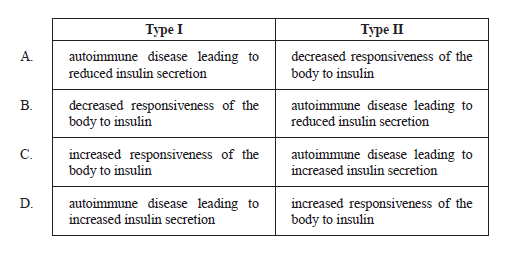
What are causes of type I and type II diabetes?
6.5 (IB 2010/MAY – SL 1/30B)
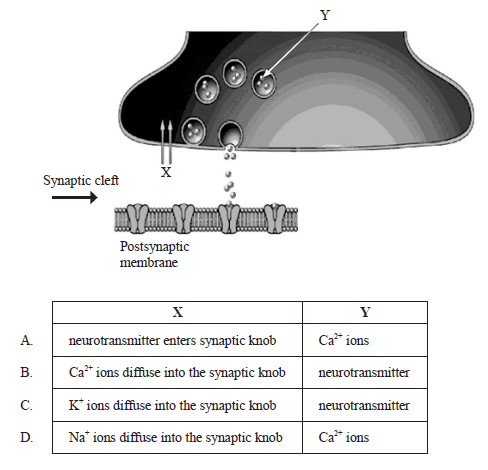
In the diagram of synaptic transmission below, what is indicated by the letters X and Y?
(IB 2010/MAY – SL P2/6)
2009 – NOVEMBER
6.2 (IB 2009/NOV – SL 1/24A)
What route does blood follow to supply oxygen to heart muscle?
A. pulmonary vein → left atrium → left ventricle → aorta → coronary artery
B. pulmonary vein → right atrium → right ventricle → aorta → coronary artery
C. pulmonary artery → left atrium → left ventricle → aorta → coronary artery
D. pulmonary artery → right atrium → right ventricle → aorta → coronary artery
6.5 (IB 2009/NOV – SL 1/25D)
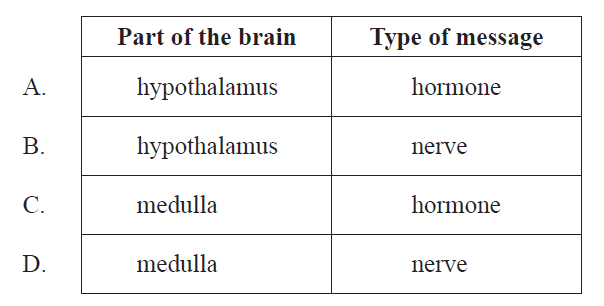
Which part of the brain has a role in the control of the heartbeat and how are messages passed from this part of the brain to the heart?
6.3 (IB 2009/NOV – SL 1/26D)
What stimulates the production of antibodies?
A. AIDS
B. Antibiotics
C. Anticodons
D. Antigens
6.4 (IB 2009/NOV – SL 1/27C)
What change occurs to the pressure and volume of the lungs when the external intercostal muscles contract?
A. Both pressure and volume increase.
B. Pressure increases and volume decreases.
C. Pressure decreases and volume increases.
D. Both pressure and volume decrease.
6.5 (IB 2009/NOV – SL 1/28D)
The graph below shows changes in membrane potential in an axon during the passage of an action potential. What is causing the decrease in membrane potential at point X?
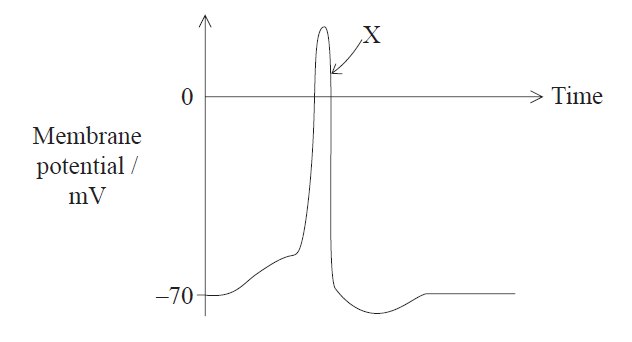
A. Sodium ions entering the axon
B. Potassium ions entering the axon
C. Sodium ions leaving the axon
D. Potassium ions leaving the axon
6.6 (IB 2009/NOV – SL 1/29A)
What is a role of the hypothalamus in homeostasis?
A. Monitoring body temperature
B. Monitoring blood glucose concentration
C. Secretion of glucagon
D. Secretion of sweat
6.6 (IB 2009/NOV – SL 1/30C)
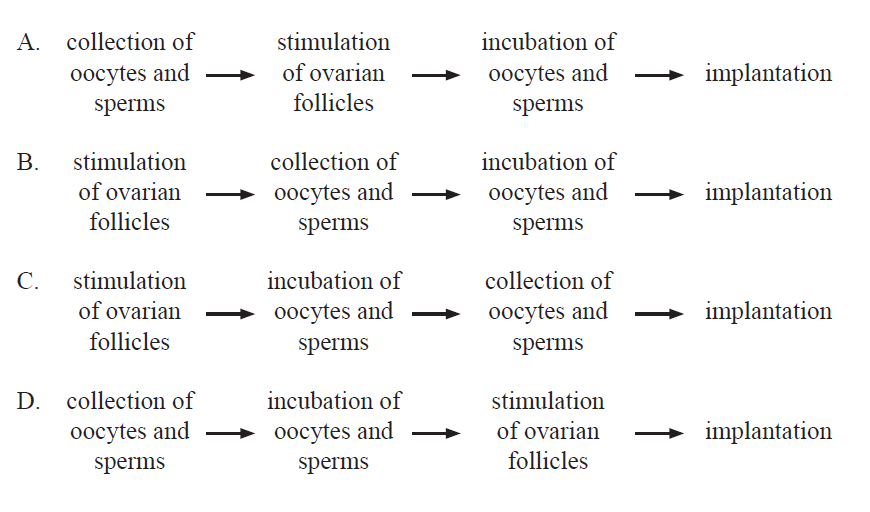
What is the sequence of operations during IVF treatment?
A. egg collection → FSH injections → fertilization
B. egg collection → fertilization → FSH injections
C. FSH injections → egg collection → fertilization
D. FSH injections → fertilization → egg collection
(IB 2009/NOV – SL P2/3)
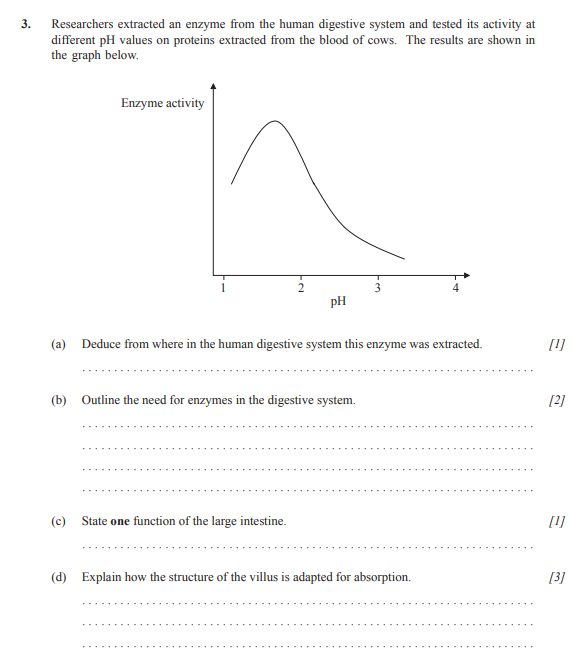
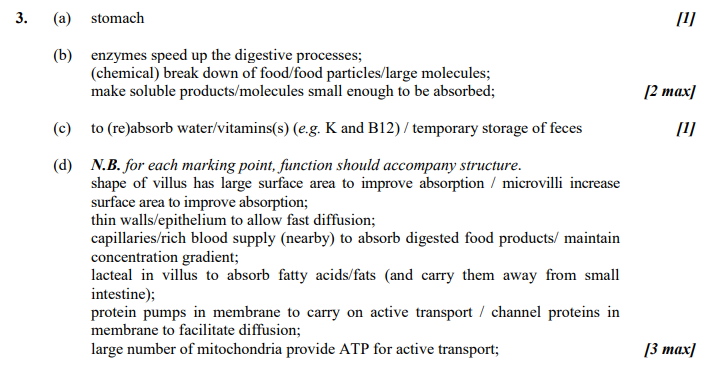
(IB 2009/NOV – SL P2/4)
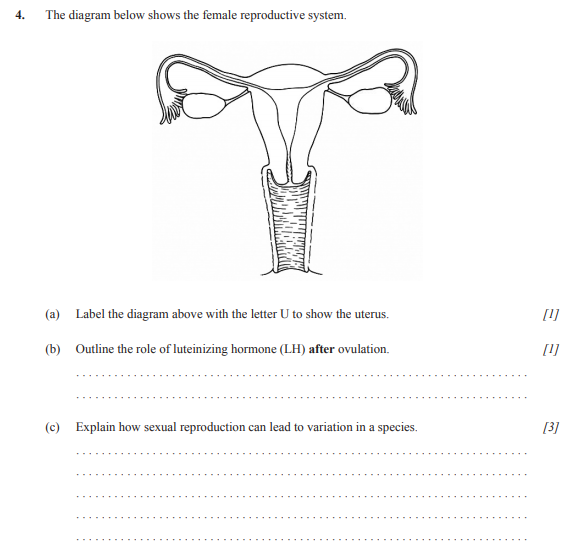
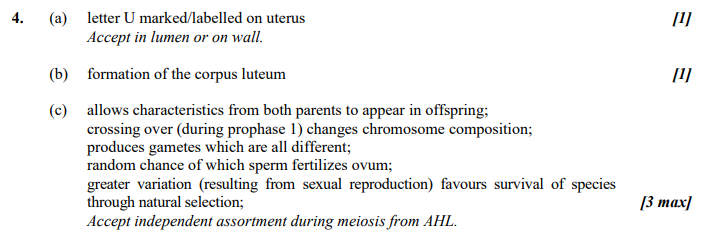
(IB 2009/NOV – SL P2/6)
2009 – MAY
6.1 (IB 2009/MAY – SL 1/25C)
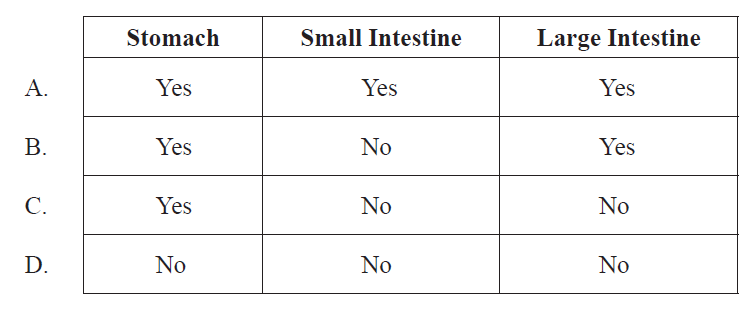
Which of the following parts of the digestive system secrete proteases?
6.3 (IB 2009/MAY – SL 1/26C)
Why are antibiotics effective against bacteria but not viruses?
A. Viruses can hide inside host cells.
B. Bacteria are recognized as pathogens but viruses are not.
C. The enzymes of bacteria can be inhibited by antibiotics.
D. Viruses are resistant to antibiotics.
6.4 (IB 2009/MAY – SL 1/27D)
What feature of alveoli adapts them to efficient gas exchange?
A. They have muscles which pump air in and out regularly.
B. Their membranes are more permeable to gases than water.
C. A constant blood supply flows through them.
D. A dense network of capillaries surrounds them.
6.5 (IB 2009/MAY – SL 1/28A)
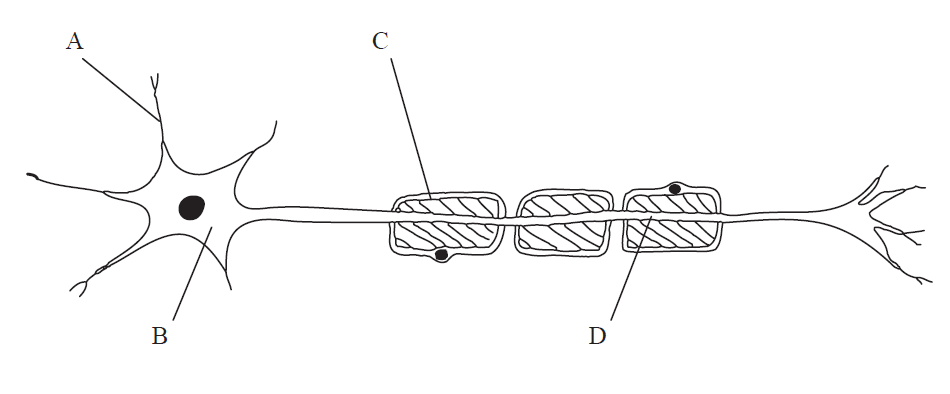
On the diagram of the motor neurone shown below, which label identifies a dendrite?
6.6 (IB 2009/MAY – SL 1/29D)
The diagram below represents the homeostatic control of body temperature. What does the part labelled X represent?
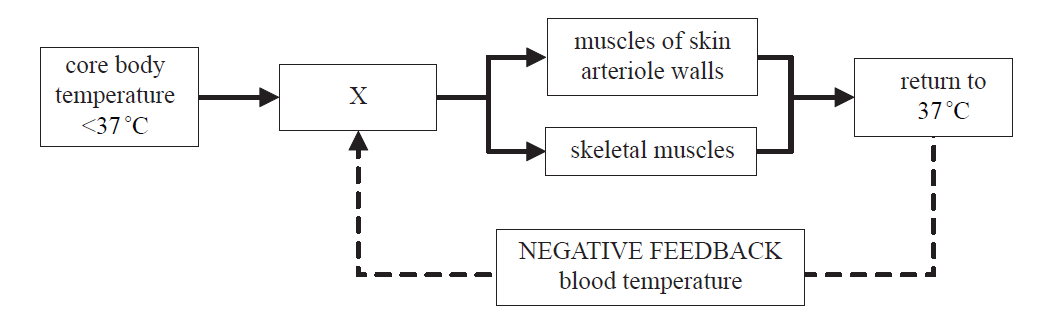
A. Heart
B. Kidney
C. Pituitary
D. Hypothalamus
6.6 (IB 2009/MAY – SL 1/30B)
What is the correct sequence of events used in IVF?